Drive controls for heavy machinery
Design challenge
While observing a round of Pickle Robot operator training in a Los Angeles port warehouse, I noticed several participants showing severe signs of anxiety while manually driving the robot.
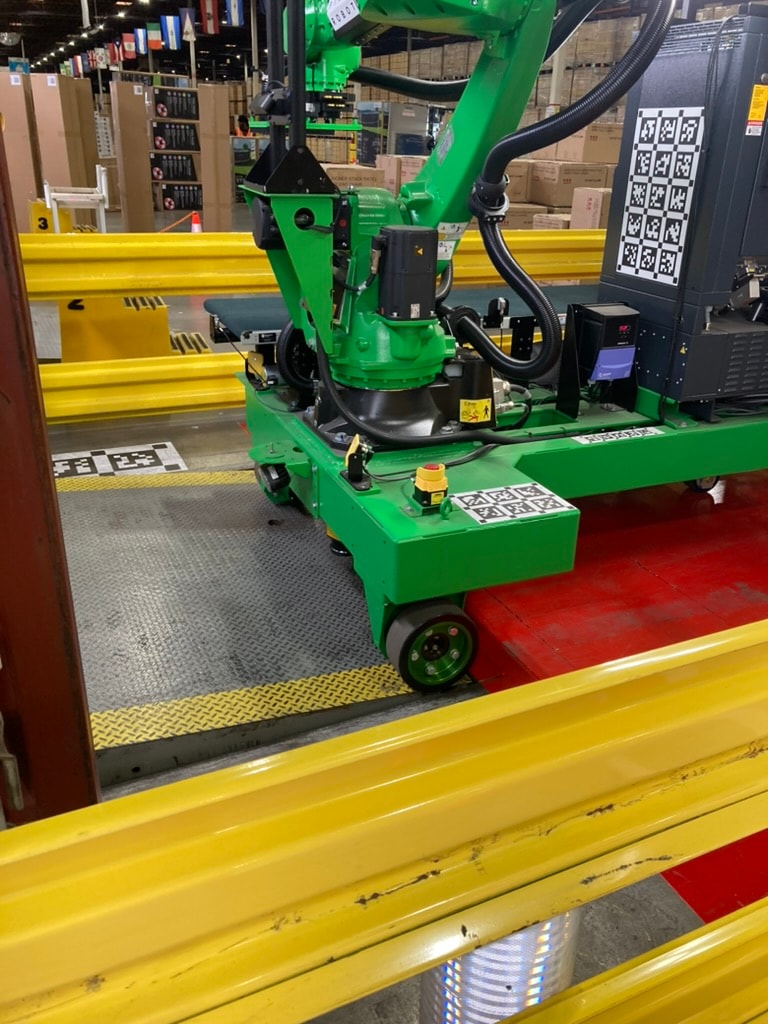
During a typical shift, operators manually drive the robot around the warehouse two to three times. They use a PlayStation controller to drive the robot out of the trailer, down a ramp, and over to the adjacent dock door.
Manually driving to the next dock door
The drive controls were difficult to learn, particularly for operators with no prior video game experience (about half of the group). Some operators displayed severe anxiety while driving, while others drove dangerously close to the edge of the ramp, risking equipment damage.
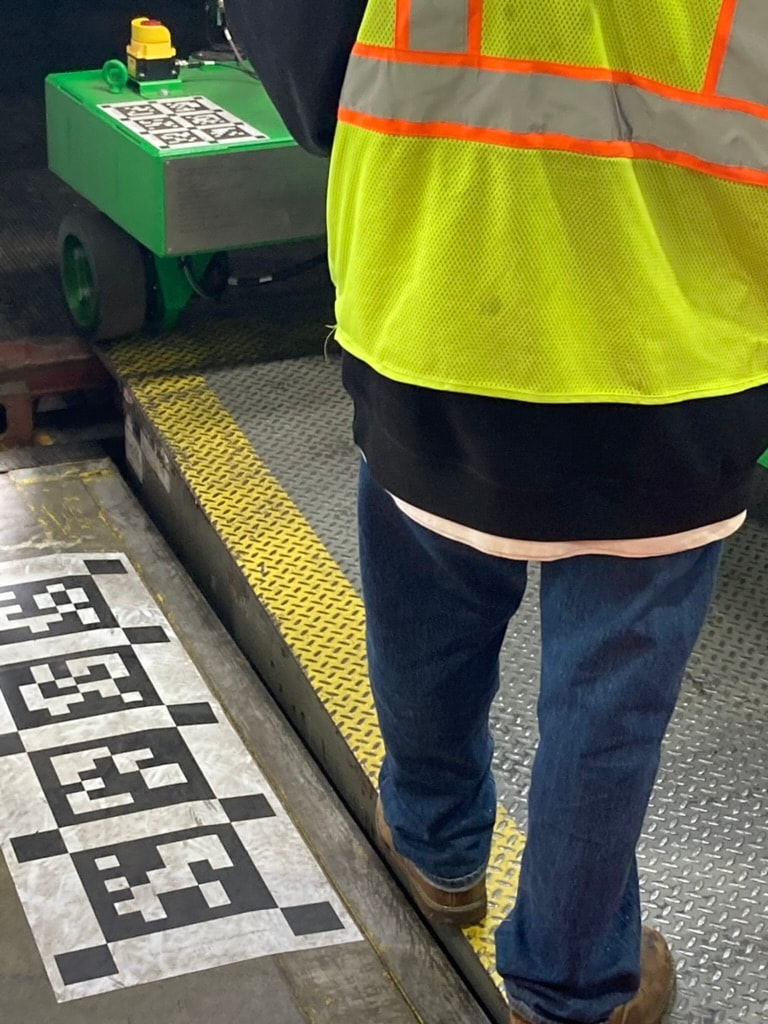
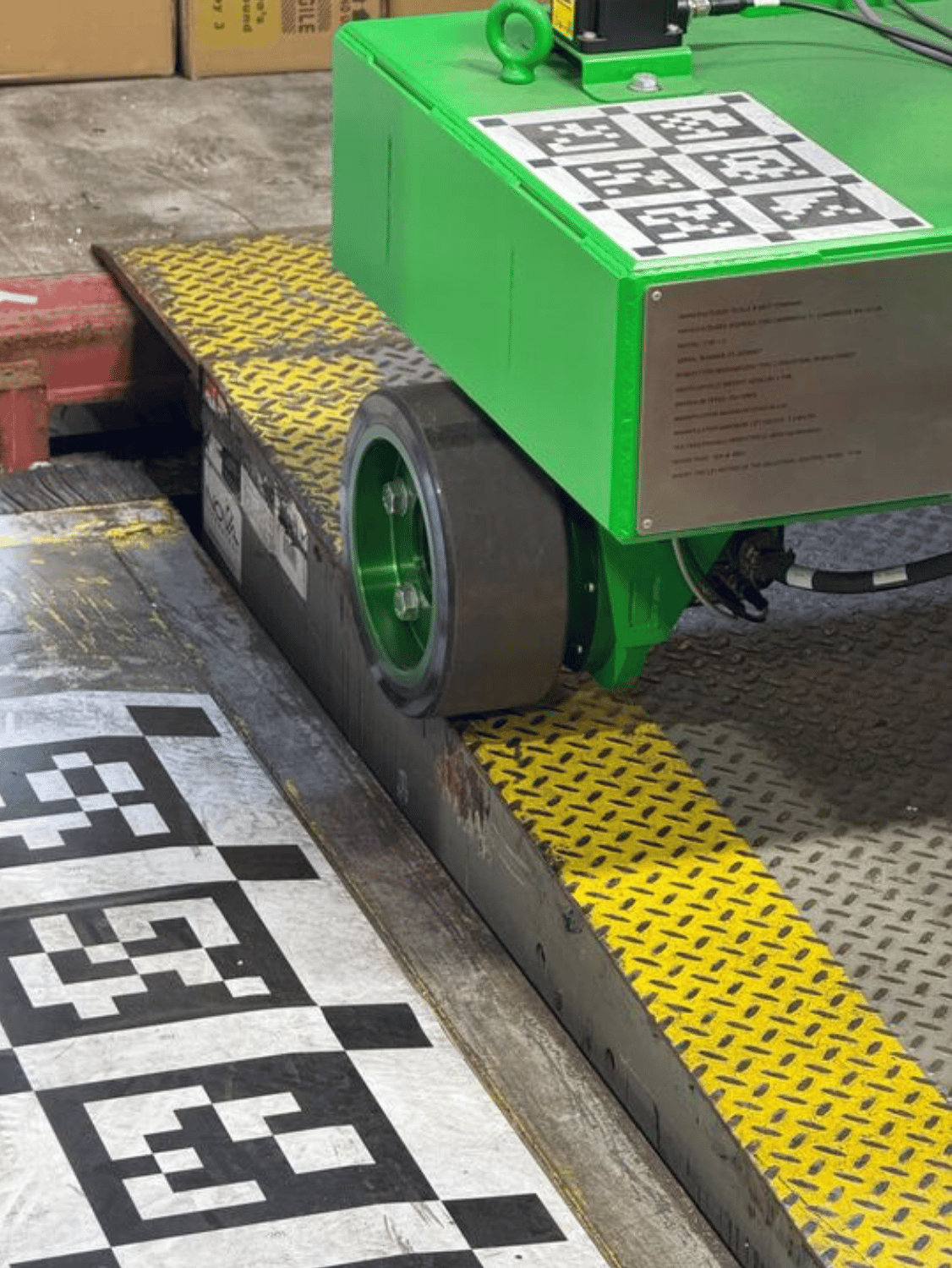
Operator driving dangerously close to the edge of the ramp
Project outcomes
I conducted an in-depth user test to determine the optimal PlayStation controller scheme for manual driving. Following the test, I secured engineering resources to implement the necessary improvements.

Improved learnability
Participants reported increased confidence in learning to drive the robot. Most stated they would feel comfortable driving independently after three to four supervised attempts.
Damage prevention
Over the following year, no operators drove off the ramp, and only one field incident occurred - where an operator drove into a wall due to inattention. The new control scheme likely prevented additional equipment damage and costly downtime.
Better ergonomics
Participants found the updated hand positioning more comfortable during extended driving sessions.
Test setup
Securing resources
I proposed a user test and secured engineering resources to address the issue. Success in a startup environment requires an entrepreneurial mindset; I initiated and led the entire process independently.
A junior engineer interested in user research asked to join the effort. I mentored her on best practices throughout the process as she assisted with data collection and analysis.
Reviewing all the possible options
I reviewed human factors literature, video games, and heavy machinery interfaces to identify potential control layouts, selecting four popular schemes for user testing.
Inspiration
Study design
Participants
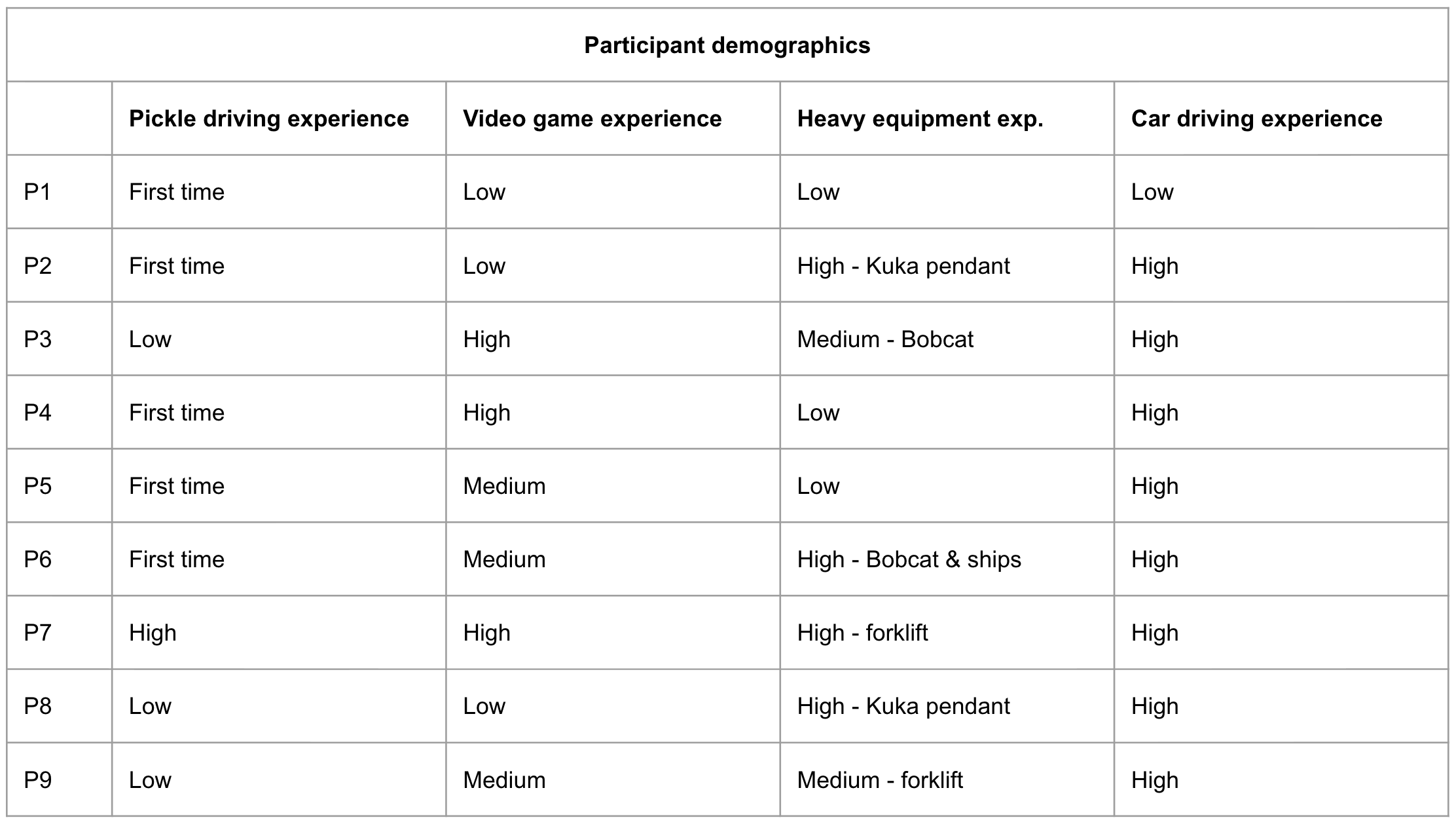
9 Pickle Robot employees participated in the study (N=9).
Obstacle course
I marked out a scale-model obstacle course on the floor using tape. Using a within-subjects design, participants navigated the course four times, testing a different control layout on each run.
Navigating the obstacle course
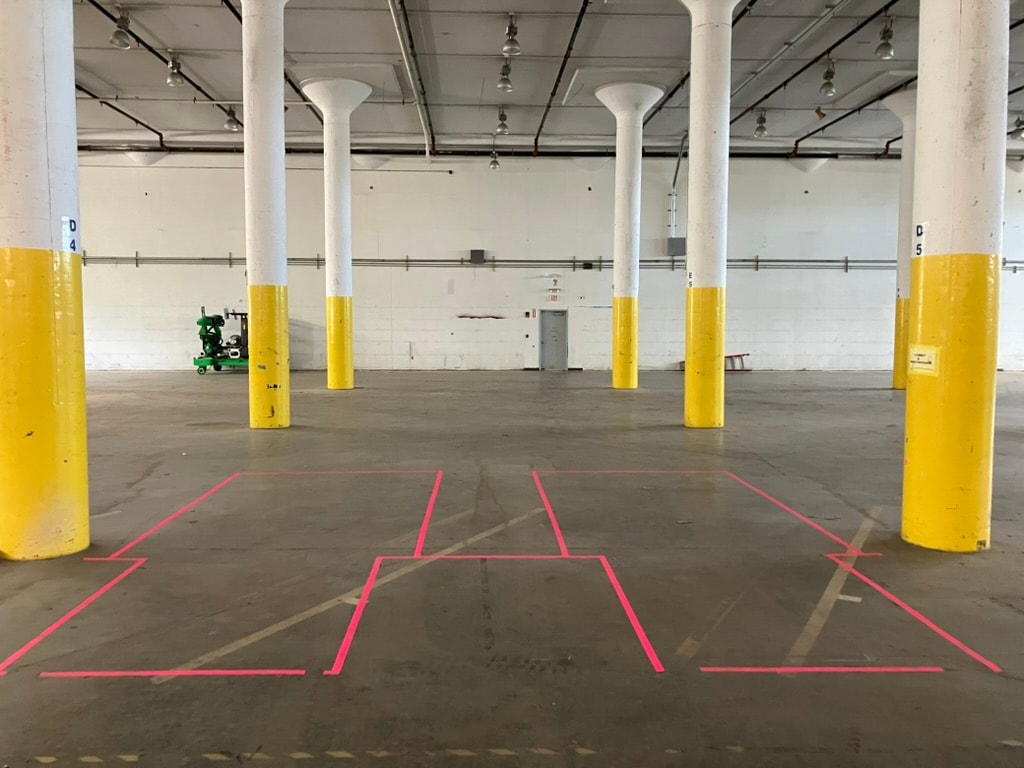
Scale model of 2 loading docks
Independent variables (what I changed)
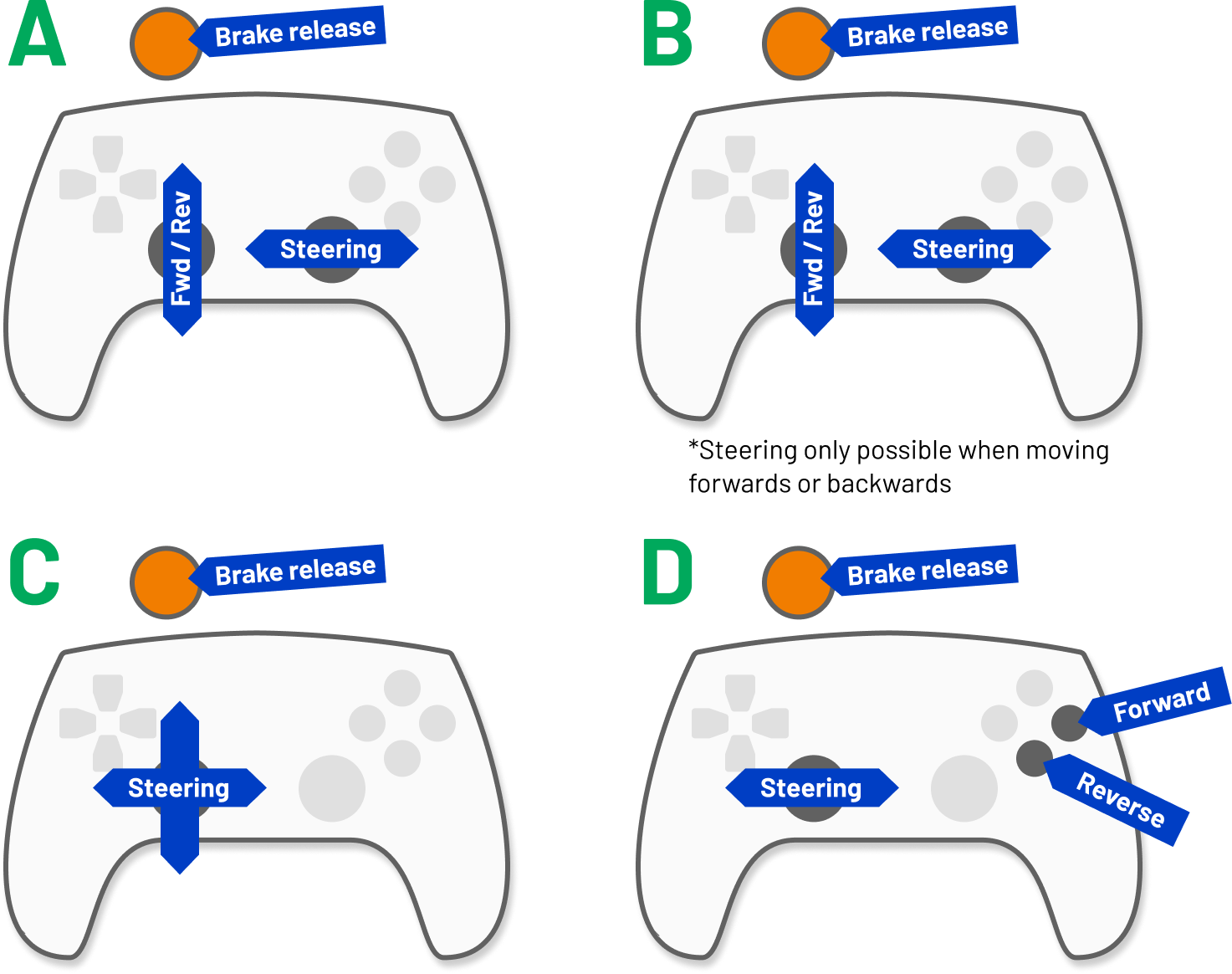
Each participant evaluated four distinct driving schemes. The order of the schemes was randomized to mitigate potential order effects.
Dependent variables (what I measured)
- Time on task
- Subjective ease of use rating
- Task success/failure/assistance needed
Running the test
Immediate observation of order effects
By the end of the first day, participants clearly improved their speed with each subsequent run. Randomizing the testing order helped counterbalance this learning effect.
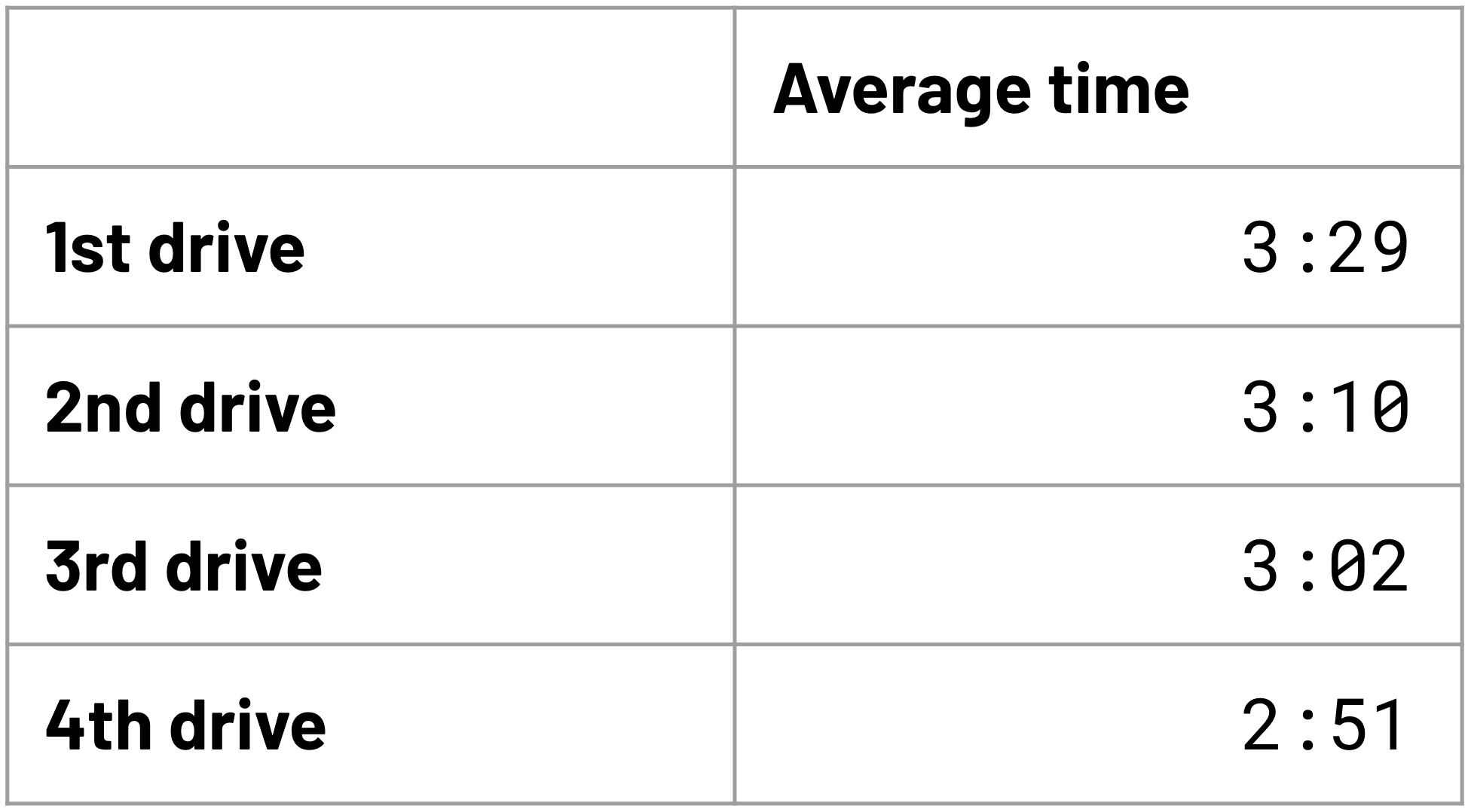
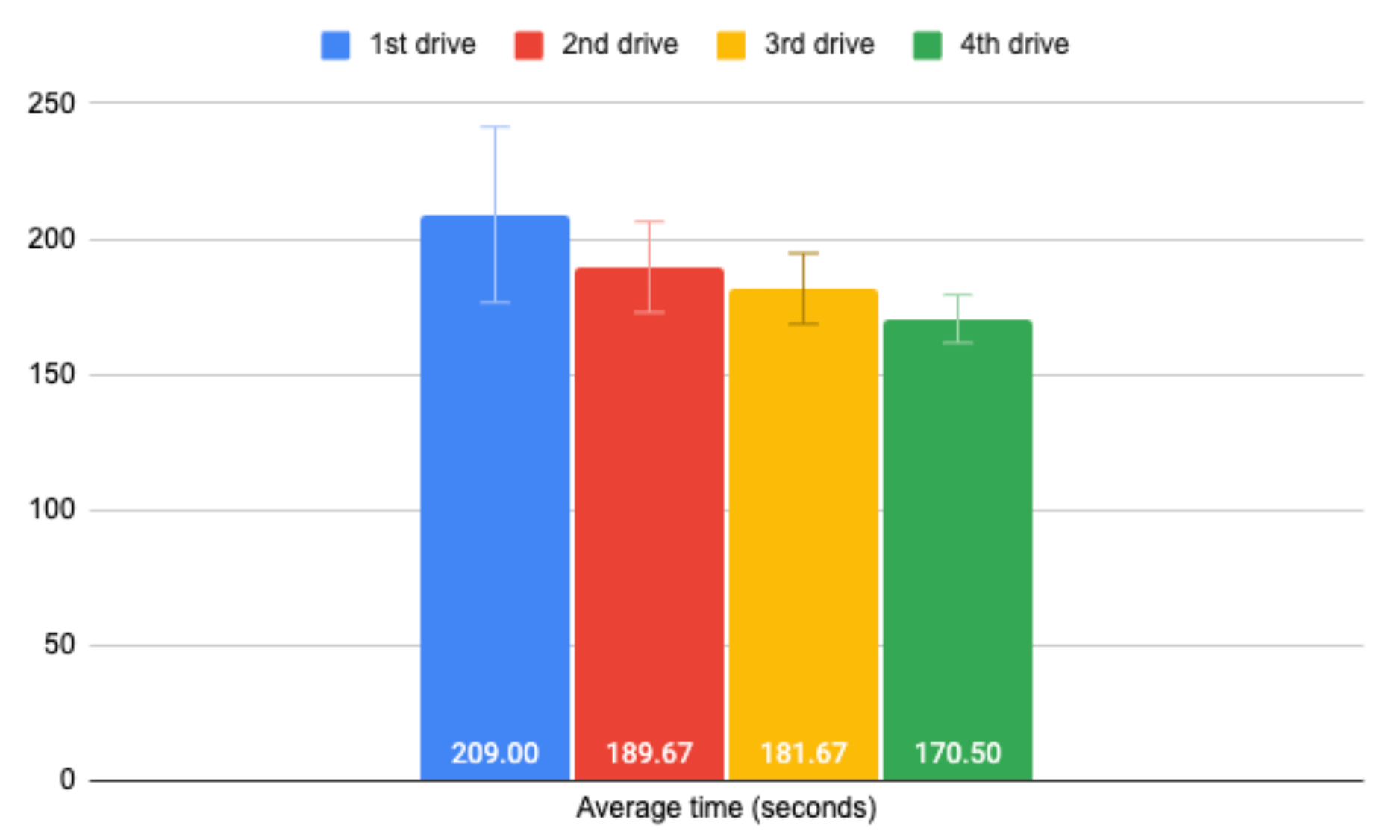
The order effect complicated data analysis
Elimination of two schemes based on qualitative feedback
Participants reported confusion from inverted steering while reversing, leading to directional errors during navigation. Additionally, one hand position was highlighted as uncomfortable.
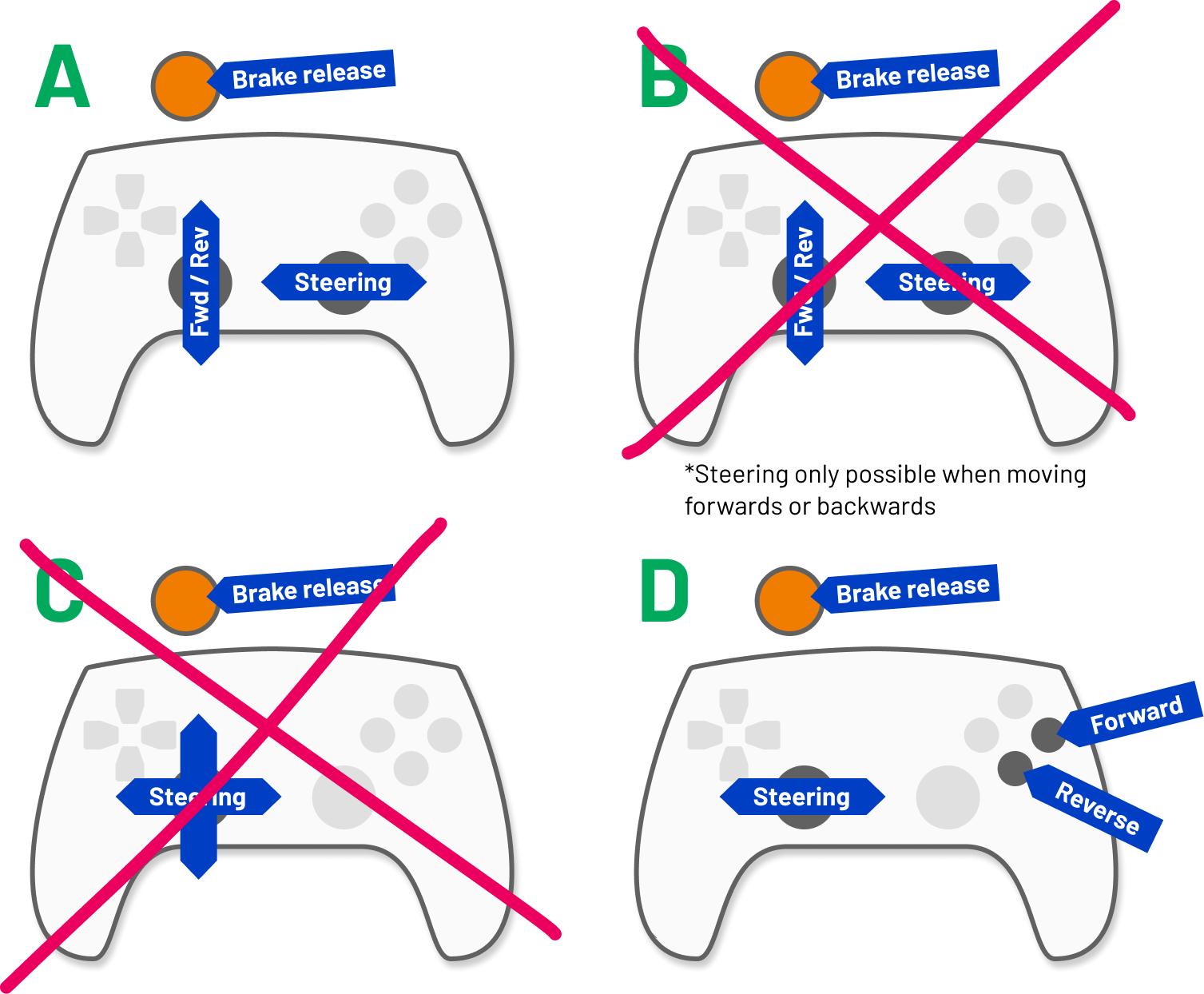
For day 2, we down-selected to 2 options
Second phase of testing with additional participants
Participants tested each of the remaining two schemes twice across four total runs, allowing them to navigate the course in both directions for each layout while maintaining randomized starting order.
Data analysis
Quantitative analysis showed no statistically significant differences in task completion time or subjective ease-of-use ratings. While Option D scored slightly higher, the sample size was insufficient for definitive conclusions.
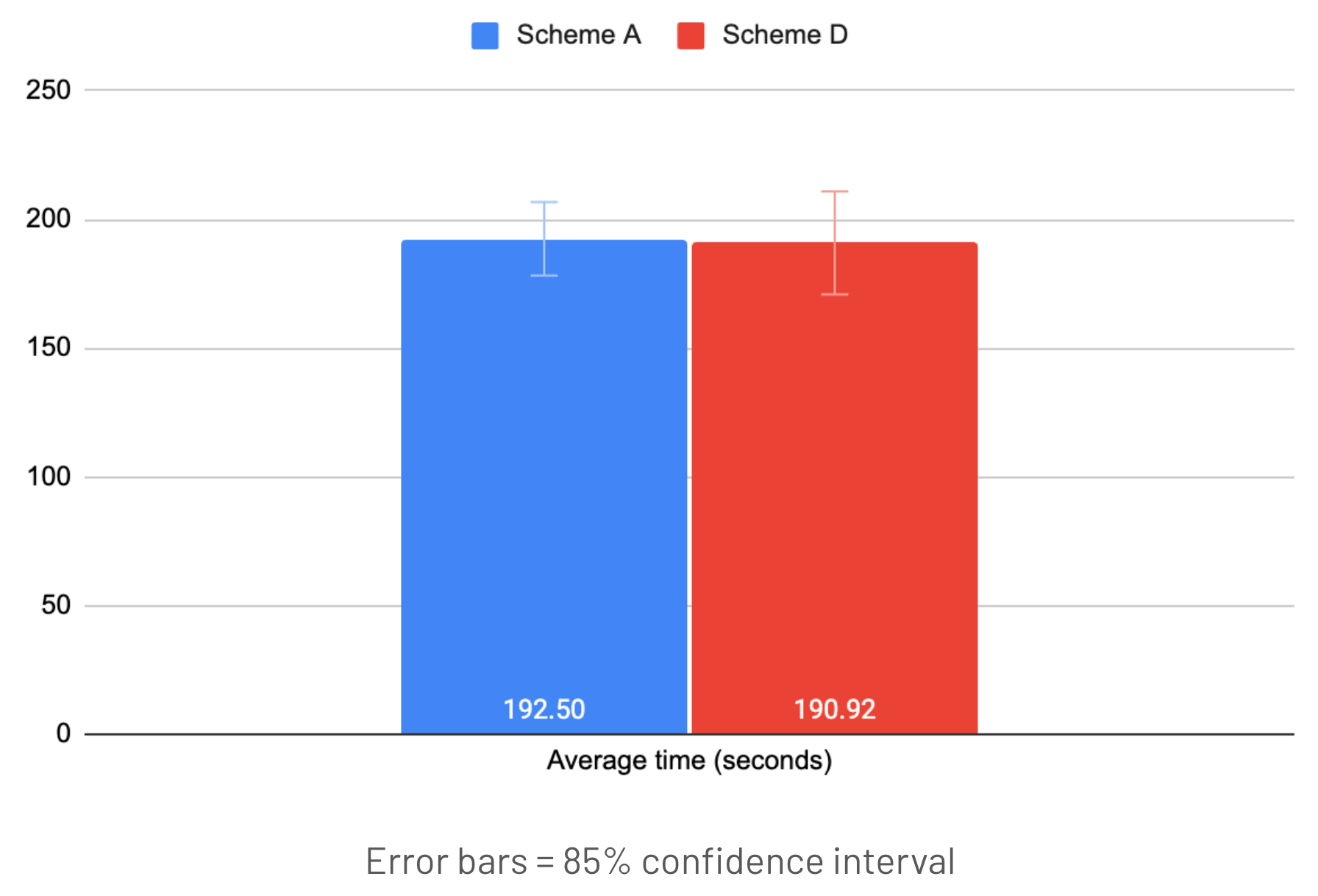
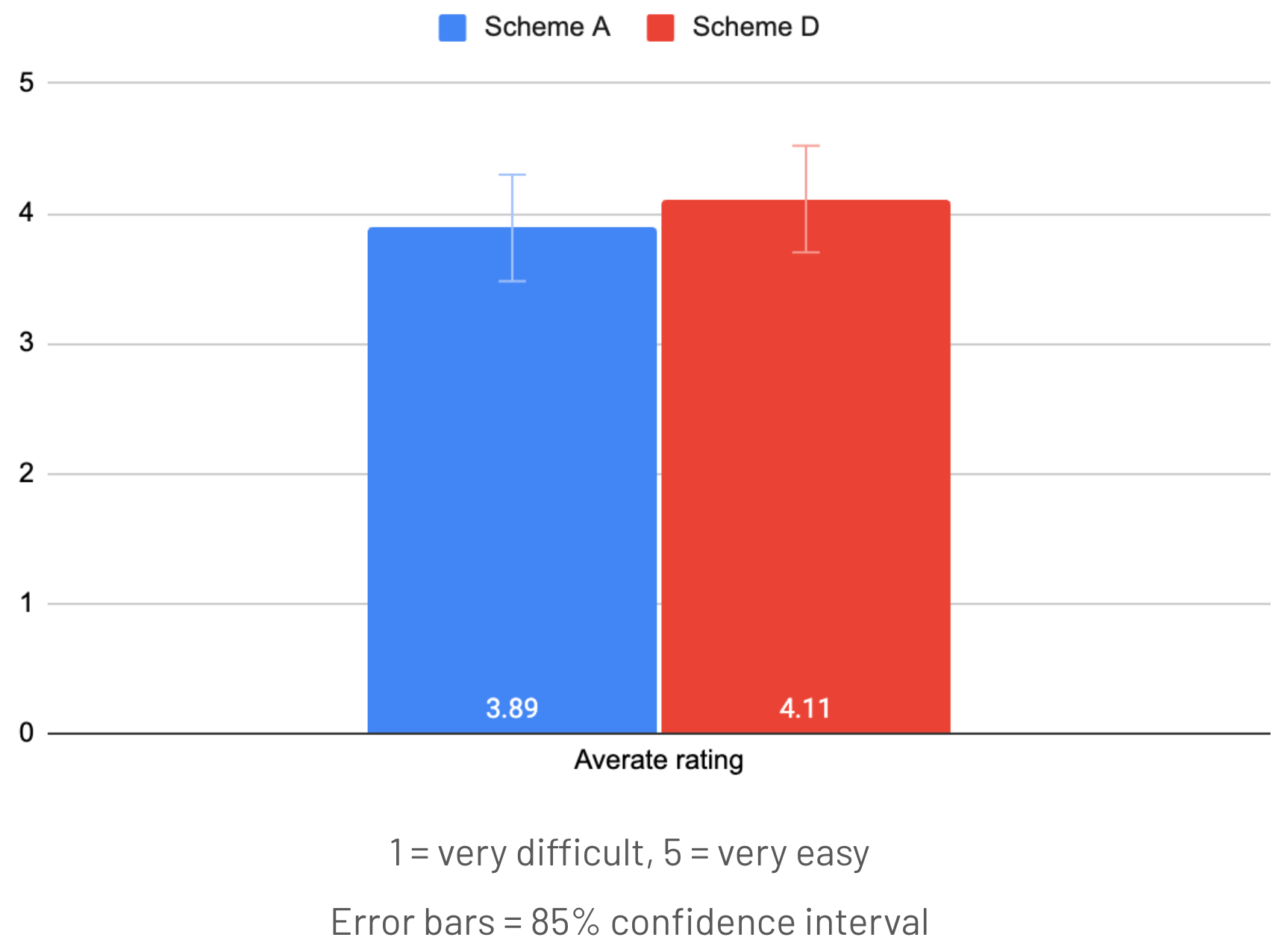
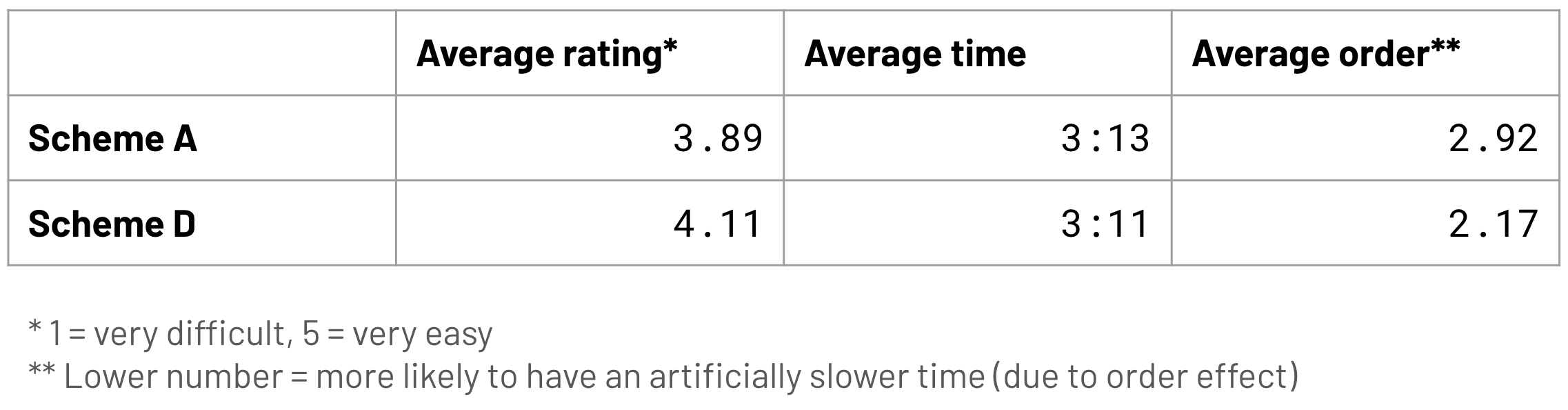
No significant difference
However, qualitative feedback provided a clearer direction:
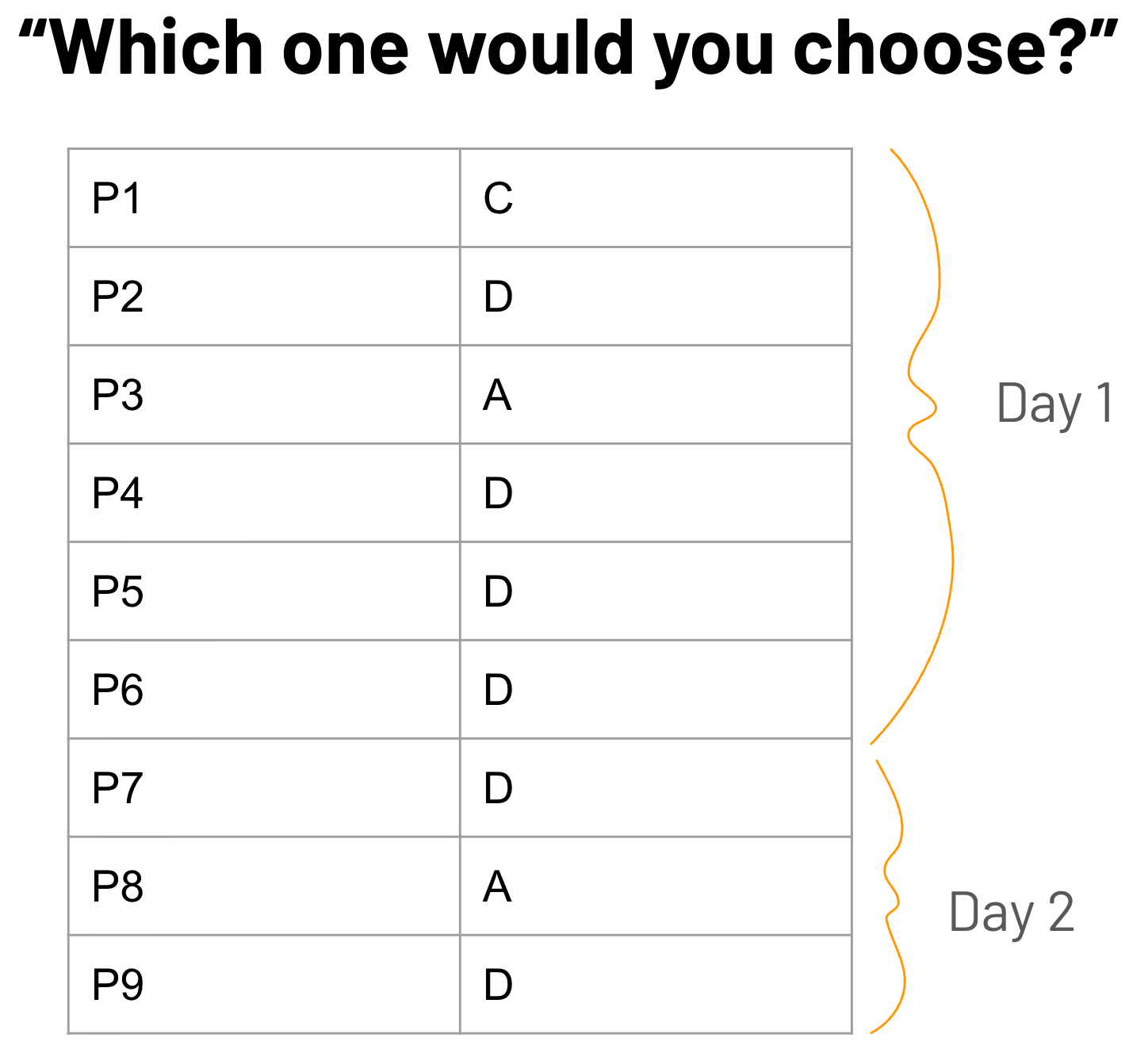
“I liked that a lot, that was the best”
“I like it better than the way we drive now”
Selecting Option D
Option D was inspired by the control layout of Mario Kart, a game designed for easy adoption by novice players while remaining precise for experienced users.
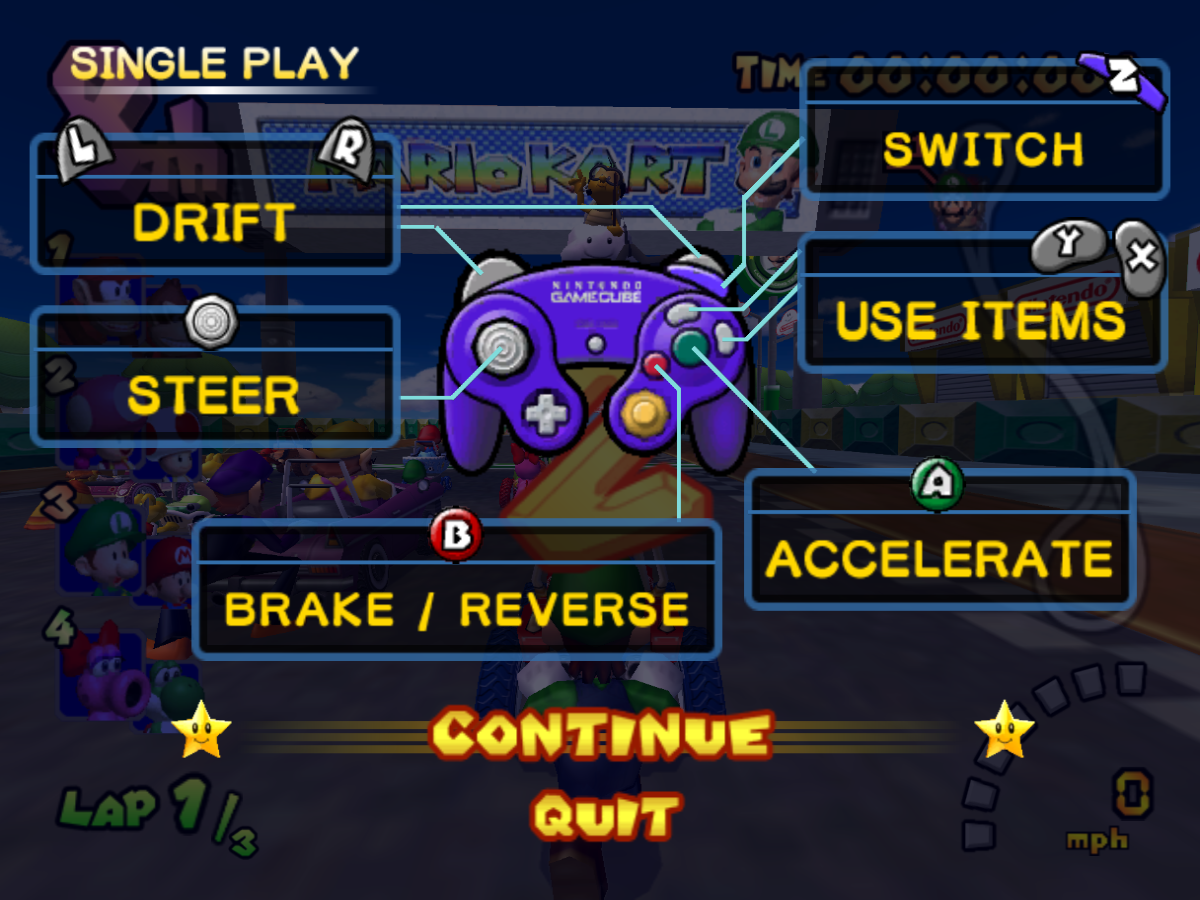
The new control scheme (minus the drift button)
Bonus finding
Observations showed participants struggling to see past the robot's large electrical cabinet, often leaning over the vehicle to view the far corner.
Following testing, we prototyped various controller cord lengths to identify the optimal driving stance. A six-foot cable provided the ideal balance of mobility and visibility. Wireless controllers were ruled out due to cost and safety regulatory constraints.
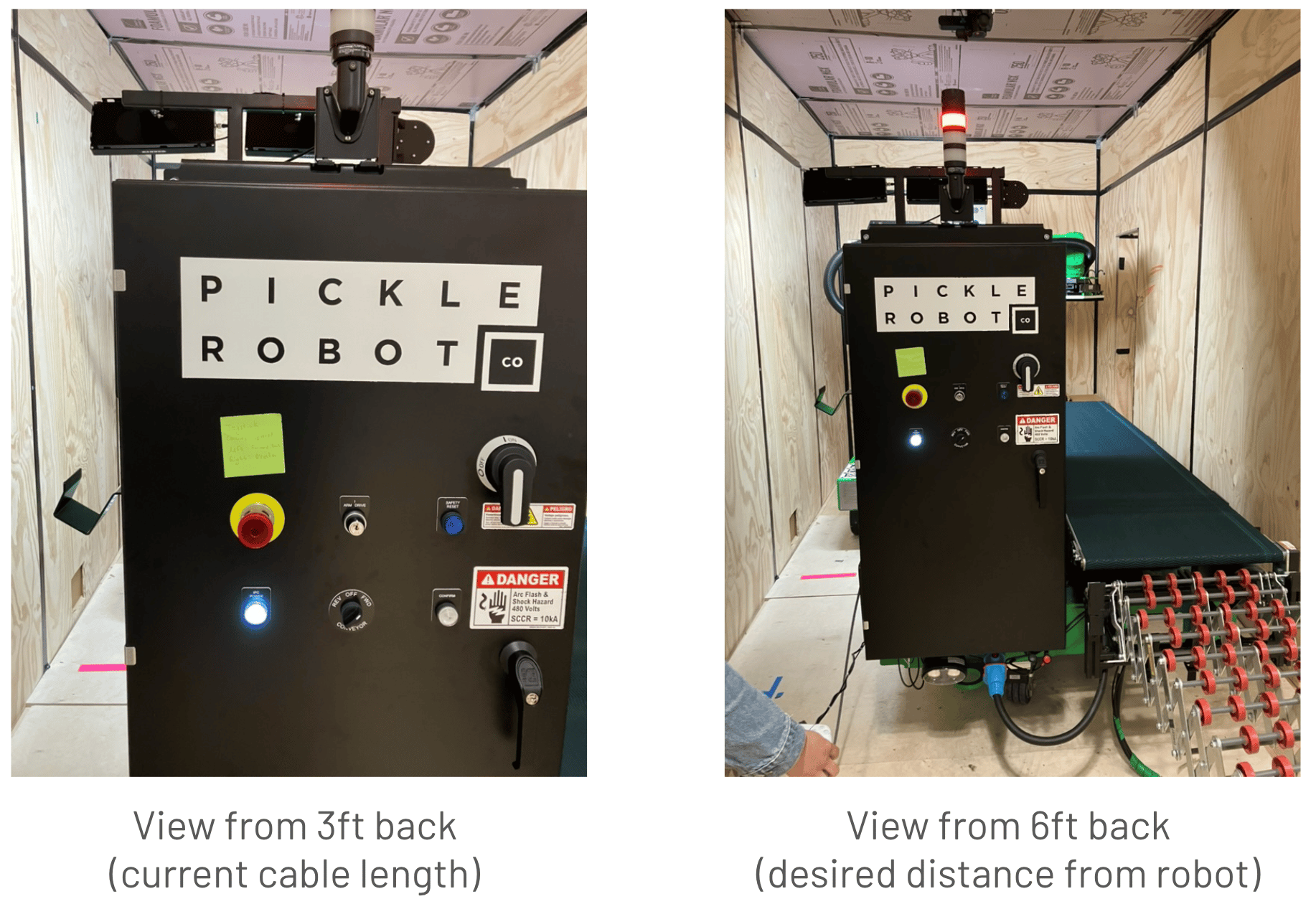
Prototyping a longer cable
Key takeaways
Keep an entrepreneurial mindset
Product designers in startup environments must maintain an entrepreneurial approach to initiate and drive improvements.
Always observe users
Direct field observation of operators is crucial for identifying critical usability issues that off-site design may overlook.
Balance field research with lab studies
Testing within a controlled environment effectively isolates variables, enabling focus on specific design challenges.
Collect qualitative and quantitative data
Quantitative metrics serve as a valuable complement to qualitative observations. In startup settings where sample sizes are typically limited, combining both methods yields the most actionable insights.

Next case study

Drive controls for heavy machinery
Design challenge
While observing a round of Pickle Robot operator training in a Los Angeles port warehouse, I noticed several participants showing severe signs of anxiety while manually driving the robot.
During a typical shift, operators manually drive the robot around the warehouse two to three times. They use a PlayStation controller to drive the robot out of the trailer, down a ramp, and over to the adjacent dock door.
Manually driving to the next dock door
The drive controls were difficult to learn, particularly for operators with no prior video game experience (about half of the group). Some operators displayed severe anxiety while driving, while others drove dangerously close to the edge of the ramp, risking equipment damage.
Operator driving dangerously close to the edge of the ramp
Project outcomes
I conducted an in-depth user test to determine the optimal PlayStation controller scheme for manual driving. Following the test, I secured engineering resources to implement the necessary improvements.
Improved learnability
Participants reported increased confidence in learning to drive the robot. Most stated they would feel comfortable driving independently after three to four supervised attempts.
Damage prevention
Over the following year, no operators drove off the ramp, and only one field incident occurred - where an operator drove into a wall due to inattention. The new control scheme likely prevented additional equipment damage and costly downtime.
Better ergonomics
Participants found the updated hand positioning more comfortable during extended driving sessions.
Test setup
Securing resources
I proposed a user test and secured engineering resources to address the issue. Success in a startup environment requires an entrepreneurial mindset; I initiated and led the entire process independently.
A junior engineer interested in user research asked to join the effort. I mentored her on best practices throughout the process as she assisted with data collection and analysis.
Reviewing all the possible options
I reviewed human factors literature, video games, and heavy machinery interfaces to identify potential control layouts, selecting four popular schemes for user testing.
Inspiration
Study design
Participants
9 Pickle Robot employees participated in the study (N=9).
Obstacle course
I marked out a scale-model obstacle course on the floor using tape. Using a within-subjects design, participants navigated the course four times, testing a different control layout on each run.
Navigating the obstacle course
Scale model of 2 loading docks
Independent variables (what I changed)
Each participant evaluated four distinct driving schemes. The order of the schemes was randomized to mitigate potential order effects.
Dependent variables (what I measured)
- Time on task
- Subjective ease of use rating
- Task success/failure/assistance needed
Running the test
Immediate observation of order effects
By the end of the first day, participants clearly improved their speed with each subsequent run. Randomizing the testing order helped counterbalance this learning effect.
The order effect complicated data analysis
Elimination of two schemes based on qualitative feedback
Participants reported confusion from inverted steering while reversing, leading to directional errors during navigation. Additionally, one hand position was highlighted as uncomfortable.
For day 2, we down-selected to 2 options
Second phase of testing with additional participants
Participants tested each of the remaining two schemes twice across four total runs, allowing them to navigate the course in both directions for each layout while maintaining randomized starting order.
Data analysis
Quantitative analysis showed no statistically significant differences in task completion time or subjective ease-of-use ratings. While Option D scored slightly higher, the sample size was insufficient for definitive conclusions.
No significant difference
However, qualitative feedback provided a clearer direction:
“I liked that a lot, that was the best”
“I like it better than the way we drive now”
Selecting Option D
Option D was inspired by the control layout of Mario Kart, a game designed for easy adoption by novice players while remaining precise for experienced users.
The new control scheme (minus the drift button)
Bonus finding
Observations showed participants struggling to see past the robot's large electrical cabinet, often leaning over the vehicle to view the far corner.
Following testing, we prototyped various controller cord lengths to identify the optimal driving stance. A six-foot cable provided the ideal balance of mobility and visibility. Wireless controllers were ruled out due to cost and safety regulatory constraints.
Prototyping a longer cable
Key takeaways
Keep an entrepreneurial mindset
Product designers in startup environments must maintain an entrepreneurial approach to initiate and drive improvements.
Always observe users
Direct field observation of operators is crucial for identifying critical usability issues that off-site design may overlook.
Balance field research with lab studies
Testing within a controlled environment effectively isolates variables, enabling focus on specific design challenges.
Collect qualitative and quantitative data
Quantitative metrics serve as a valuable complement to qualitative observations. In startup settings where sample sizes are typically limited, combining both methods yields the most actionable insights.
Next case study
Drive controls for heavy machinery
Design challenge
While observing a round of Pickle Robot operator training in a Los Angeles port warehouse, I noticed several participants showing severe signs of anxiety while manually driving the robot.
During a typical shift, operators manually drive the robot around the warehouse two to three times. They use a PlayStation controller to drive the robot out of the trailer, down a ramp, and over to the adjacent dock door.
Manually driving to the next dock door
The drive controls were difficult to learn, particularly for operators with no prior video game experience (about half of the group). Some operators displayed severe anxiety while driving, while others drove dangerously close to the edge of the ramp, risking equipment damage.
Operator driving dangerously close to the edge of the ramp
Project outcomes
I conducted an in-depth user test to determine the optimal PlayStation controller scheme for manual driving. Following the test, I secured engineering resources to implement the necessary improvements.
Improved learnability
Participants reported increased confidence in learning to drive the robot. Most stated they would feel comfortable driving independently after three to four supervised attempts.
Damage prevention
Over the following year, no operators drove off the ramp, and only one field incident occurred - where an operator drove into a wall due to inattention. The new control scheme likely prevented additional equipment damage and costly downtime.
Better ergonomics
Participants found the updated hand positioning more comfortable during extended driving sessions.
Test setup
Securing resources
I proposed a user test and secured engineering resources to address the issue. Success in a startup environment requires an entrepreneurial mindset; I initiated and led the entire process independently.
A junior engineer interested in user research asked to join the effort. I mentored her on best practices throughout the process as she assisted with data collection and analysis.
Reviewing all the possible options
I reviewed human factors literature, video games, and heavy machinery interfaces to identify potential control layouts, selecting four popular schemes for user testing.
Inspiration
Study design
Participants
9 Pickle Robot employees participated in the study (N=9).
Obstacle course
I marked out a scale-model obstacle course on the floor using tape. Using a within-subjects design, participants navigated the course four times, testing a different control layout on each run.
Navigating the obstacle course
Scale model of 2 loading docks
Independent variables (what I changed)
Each participant evaluated four distinct driving schemes. The order of the schemes was randomized to mitigate potential order effects.
Dependent variables (what I measured)
- Time on task
- Subjective ease of use rating
- Task success/failure/assistance needed
Running the test
Immediate observation of order effects
By the end of the first day, participants clearly improved their speed with each subsequent run. Randomizing the testing order helped counterbalance this learning effect.
The order effect complicated data analysis
Elimination of two schemes based on qualitative feedback
Participants reported confusion from inverted steering while reversing, leading to directional errors during navigation. Additionally, one hand position was highlighted as uncomfortable.
For day 2, we down-selected to 2 options
Second phase of testing with additional participants
Participants tested each of the remaining two schemes twice across four total runs, allowing them to navigate the course in both directions for each layout while maintaining randomized starting order.
Data analysis
Quantitative analysis showed no statistically significant differences in task completion time or subjective ease-of-use ratings. While Option D scored slightly higher, the sample size was insufficient for definitive conclusions.
No significant difference
However, qualitative feedback provided a clearer direction:
“I liked that a lot, that was the best”
“I like it better than the way we drive now”
Selecting Option D
Option D was inspired by the control layout of Mario Kart, a game designed for easy adoption by novice players while remaining precise for experienced users.
The new control scheme (minus the drift button)
Bonus finding
Observations showed participants struggling to see past the robot's large electrical cabinet, often leaning over the vehicle to view the far corner.
Following testing, we prototyped various controller cord lengths to identify the optimal driving stance. A six-foot cable provided the ideal balance of mobility and visibility. Wireless controllers were ruled out due to cost and safety regulatory constraints.
Prototyping a longer cable
Key takeaways
Keep an entrepreneurial mindset
Product designers in startup environments must maintain an entrepreneurial approach to initiate and drive improvements.
Always observe users
Direct field observation of operators is crucial for identifying critical usability issues that off-site design may overlook.
Balance field research with lab studies
Testing within a controlled environment effectively isolates variables, enabling focus on specific design challenges.
Collect qualitative and quantitative data
Quantitative metrics serve as a valuable complement to qualitative observations. In startup settings where sample sizes are typically limited, combining both methods yields the most actionable insights.
Next case study